
Have you ever been cruising down Cornell Road, enjoying a rare sunny afternoon in Hillsboro, only to hear a faint, metallic scritch-scratch every time you touch the brake pedal? It is a sound that usually triggers a bit of anxiety. You might think, "I'm pretty handy; I can probably swap those pads out in my driveway this weekend and save a few bucks."
We love the DIY spirit, but when it comes to your vehicle’s stopping power, the margin for error is razor-thin. Brakes are arguably the most critical safety system on your car, and even a small oversight can lead to noisy stops, premature wear, or: in the worst-case scenario: complete system failure.
At Clay's Auto Service, we see the aftermath of "driveway brake jobs" quite often. Usually, it starts with a simple mistake that turns into a much more expensive fix down the line. So, are you making these common brake repair mistakes? Let’s walk through the most frequent blunders and how you can ensure your car stays safe on the road.
1. The "Pad Slap": Skipping the Rotors
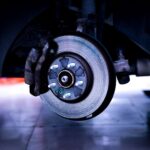
This is perhaps the number one mistake we see in the world of DIY and budget auto shops. A "pad slap" is exactly what it sounds like: removing the old, worn-out brake pads and sliding in a brand-new set without doing anything to the brake rotors.
But why is this a problem? Think of your brake pads and rotors like a team. Over thousands of miles, your old pads and rotors have worn down together, creating a unique "map" of grooves and heat patterns on the rotor surface. When you put a perfectly flat new pad against a grooved, uneven rotor, the two surfaces don't meet properly.
This leads to several issues:
- Reduced Braking Power: The surface area contact is significantly lower until the pad eventually wears down to match the rotor's grooves.
- Noise and Vibration: Those uneven surfaces are a recipe for squealing and "pedal pulsation."
- Glazing: Improper contact can cause excessive heat, which "cooks" the new pad material, making it hard and slick.
At Clay's Auto Service, our ASE Certified technicians always inspect the rotors. Whether they need to be "resurfaced" (machined to a flat finish) or replaced entirely, ensuring a fresh mating surface is non-negotiable for a professional brake repair in Hillsboro.

2. Using the Brake Hose as a Bungee Cord
When you remove the brake caliper to get to the pads, it’s still connected to the car by a heavy-duty rubber hose filled with hydraulic fluid. One of the most common: and dangerous: mistakes is letting that heavy metal caliper just hang there, dangling by the hose.
While the hose looks tough, it isn't designed to support the weight of the caliper. Hanging it this way can cause internal damage to the hose lining that you can't even see from the outside. Eventually, the inside of the hose can collapse or act like a "one-way valve," keeping your brakes applied even when you let off the pedal. This leads to overheating and massive brake drag.
We always use dedicated hangers or "S-hooks" to support the caliper safely. It’s a small step that prevents a major hydraulic headache later on.
3. Forgetting the "Vitamin G" (Grease)
Did you know that your brake calipers are designed to move? Most modern cars use "floating" calipers that slide back and forth on metal pins. For this system to work correctly, those pins need to be clean and properly lubricated with high-temperature brake grease.
Many DIYers either forget to lubricate these pins or: even worse: use the wrong type of grease. Using standard chassis grease or WD-40 is a big "no-no" because the intense heat generated by braking will melt it away or cause the rubber boots to swell and seize up.
When the pins seize, your brakes can't move freely. This results in:
- One pad wearing down to the metal while the other looks brand new.
- The car pulling to one side when you brake.
- Significantly increased stopping distances.

4. Ignoring the Brake Fluid’s Message
When you look under the hood and notice your brake fluid reservoir is a little low, what's your first instinct? For many, it’s to just top it off and keep driving. However, in a brake system, low fluid is almost always a symptom of a larger story.
Because the brake system is a "closed" system, fluid doesn't just evaporate. If the level is low, it means one of two things:
- Your pads are worn out: As the pads get thinner, the caliper pistons stay further out, which pulls more fluid down into the lines.
- You have a leak: This is a major safety hazard that requires immediate attention.
Simply adding fluid without investigating the cause is like putting a band-aid over a deep cut without cleaning it. Our team at Clay's Auto Service performs a comprehensive brake service to find out why that fluid is low in the first place.
5. Fighting with the Electric Parking Brake (EPB)
Technology is great, but it has definitely made car maintenance more complex. Many modern vehicles now feature Electric Parking Brakes (EPB) instead of a traditional hand lever and cable.
If you try to compress the caliper piston on an EPB-equipped car without putting it into "Service Mode" via a diagnostic scanner, you can actually destroy the expensive electric motor attached to the caliper. We’ve seen many well-intentioned owners face a thousand-dollar repair bill because they didn't have the right software to "retract" the electronic park brake properly.
As a modern shop, we stay updated with the latest diagnostic tools to ensure your high-tech braking system is handled with the precision it requires.

6. Buying the "Economy" Parts
We get it: auto repairs can be an unexpected hit to the wallet. It’s tempting to go to the local parts store and ask for the cheapest set of pads they have. But when it comes to brake repair in Hillsboro, the old saying "you get what you pay for" couldn't be truer.
Cheap brake pads often use inferior friction materials that create massive amounts of black dust, squeal like a banshee, and wear out in half the time of a quality set. More importantly, they often lack the heat dissipation qualities needed for safe emergency stops.
We believe in doing the job right the first time. That’s why we use high-quality parts that meet or exceed OEM standards. Plus, we stand behind our work with a 24-month/24,000-mile warranty, giving you peace of mind that your investment is protected.
7. Skipping the System Bleed
Whenever you open the hydraulic system: or even just compress the pistons: there is a chance that air or contaminants can enter the lines. Air is compressible; brake fluid is not. If you have air bubbles in your brake lines, your pedal will feel "spongy," and you won't have the firm, immediate stopping power you need in an emergency.
Properly bleeding the brakes is a tedious process that often requires two people or specialized vacuum equipment. It’s a step that many rushed DIY jobs skip, but it’s essential for a firm pedal and consistent performance.

Why Choose Clay's Auto Service for Your Brake Repair in Hillsboro?
So, after reading all that, how are you feeling about your brakes? If it sounds a bit more complicated than a simple "remove and replace" job, that's because it is! Your safety is too important to leave to chance or "good enough" repairs.
At Clay's Auto Service, we take the stress out of the process. When you bring your vehicle to us for brake repair, you aren't just getting new parts; you’re getting the expertise of ASE Certified professionals who know exactly what to look for.
What sets us apart?
- ASE Certified Technicians: Our team undergoes rigorous training and testing to stay at the top of their game.
- Comprehensive Inspections: We don't just look at the pads; we check the lines, the fluid condition, the master cylinder, and the hardware.
- Industry-Leading Warranty: We provide a 24-month/24,000-mile warranty on our repairs. If something isn't right, we’ll make it right.
- Transparent Communication: We’ll explain exactly what your car needs (and what it doesn't) in plain English: no "mechanic-speak" here.
Don't wait until that little squeak turns into a scary grinding noise. Whether you need a simple fluid flush or a complete brake overhaul, we are here to help you stay safe on the Oregon roads.
Ready to experience reliable service with a personal touch? Contact us today to schedule your brake inspection, or check out our online specials to see how you can save on your next visit. We look forward to seeing you at the shop!