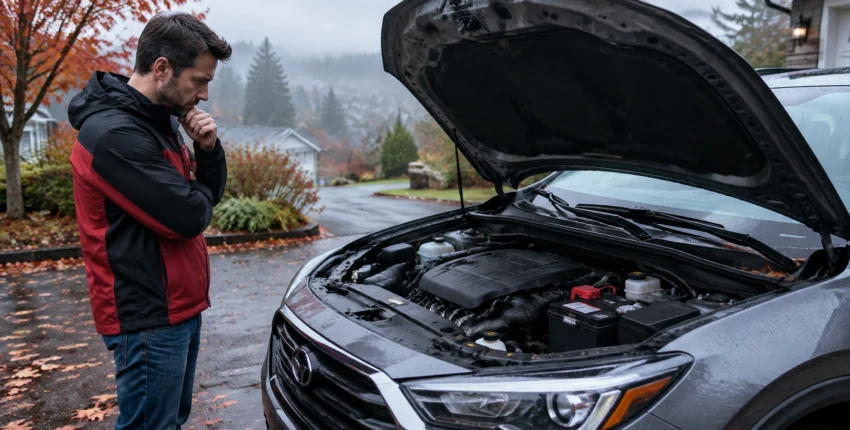
Have you ever turned the key on a chilly morning and heard nothing but a slow crank, or a frustrating series of clicks? In Hillsboro, the first cold mornings of October and November often reveal a battery that seemed perfectly fine all summer.
That timing is not a coincidence. Summer heat can weaken a battery internally, while colder temperatures reduce its available power and make your engine harder to start. A quick battery and charging-system test now can help you avoid a no-start situation later.
At Clay’s Auto Service, we believe preventive maintenance should be simple, transparent, and practical. So let’s look at why fall is the right time to test your battery, what you can check at home, and what a professional test actually tells you.
Why Cold Weather Is Hard on Your Car Battery
Your battery uses a chemical reaction to produce electrical power. When temperatures drop, that reaction slows down, which means the battery cannot deliver as much energy as it can on a warm day.
According to AAA’s winter battery guidance, a battery can lose roughly 35% of its strength around 32°F and even more as temperatures approach 0°F. Hillsboro winters may not regularly reach those extreme temperatures, but even a moderate cold snap can expose a battery that is already aging or partially weakened.
But why does your engine need more power at the same time?
Cold Oil Increases Starting Effort
Engine oil becomes thicker in cold weather. That thicker oil creates more resistance inside the engine, so the starter motor must work harder to turn everything over.
A strong battery can usually handle that extra demand. A battery near the end of its service life may not. That is why a vehicle can start normally in September and struggle suddenly on a cold October morning.
Fall Accessories Add Electrical Demand
Cold-weather driving also increases your vehicle’s electrical load. You may use several of these at the same time:
- Headlights during darker morning commutes
- The cabin heater and blower motor
- The rear-window defroster
- Heated seats or steering wheel
- Windshield wipers during fall rain
- Phone chargers and other accessories
Your alternator replaces the energy used during starting, but short trips may not give it enough time to fully recharge the battery. Repeated short trips with multiple accessories switched on can gradually leave a marginal battery undercharged.
Summer Heat May Have Started the Problem
The first cold morning gets the blame, but summer heat often does the damage. High temperatures can accelerate internal battery wear and reduce its overall life. The battery may continue working through the warmer months, then fail when cold weather adds one more challenge.
That is why fall testing is smart preventive maintenance in Hillsboro. You are checking the battery before the weather places its greatest demands on the starting system.
Warning Signs Your Battery May Be Weak
Does your car still start? That does not necessarily mean the battery is healthy. A failing battery can work several times before it finally cannot provide enough power.
Watch for these warning signs:
- Slow or labored cranking: The engine turns over more slowly than usual, especially first thing in the morning.
- Clicking when you turn the key: Rapid clicking often means the battery voltage drops too low to keep the starter engaged.
- Dim headlights or dashboard lights: Lights that flicker or become noticeably dim may point to battery or charging-system trouble.
- Needing a jump-start: A jump may get you moving, but it does not explain why the battery went weak.
- Corrosion around the terminals: White, blue, or green buildup can increase electrical resistance.
- A battery warning light: This may indicate a charging problem rather than a bad battery itself.
- A battery that is three to five years old: Battery life varies, but older batteries deserve closer attention.
- A swollen, cracked, or leaking case: These are serious physical warning signs and should be inspected promptly.
Have you noticed even one of these symptoms? A professional test can tell you whether the battery is weak, undercharged, or being affected by another electrical problem.
What a Battery and Charging-System Test Checks
A battery test is more useful than simply asking whether the car starts today. At Clay’s Auto Service, a proper evaluation looks at the battery and the systems that support it.

1. State of Charge
State of charge describes how much energy is currently stored in the battery. A low reading may mean the battery is failing, the vehicle has been sitting, or the alternator is not recharging it properly.
A low charge does not automatically mean you need a new battery. It does mean the cause should be identified before the problem repeats.
2. Load Capacity
A load test places an electrical demand on the battery similar to what it experiences during engine starting. The test measures whether the battery can maintain enough voltage under that demand.
Why does this matter? A battery may show acceptable voltage while sitting but fail under load. That is often the difference between “it starts in the driveway” and “it leaves you stranded at work.”
3. Alternator Output
The alternator generates electricity while the engine is running. It powers your vehicle’s electrical systems and restores energy to the battery.
If alternator output is too low, the battery may remain undercharged. If output is too high, the battery and other electrical components can be damaged. A complete starting-system check helps separate a battery problem from an alternator or belt-related problem.
If your dashboard battery light is on, our engine diagnostics and auto repair services can help identify the actual cause.
4. Parasitic Draw
Parasitic draw is the small amount of electricity your vehicle uses while it is parked. Some draw is normal, but an excessive drain can come from a faulty module, aftermarket accessory, dash camera, glovebox light, or another electrical issue.
If the battery tests healthy but goes dead overnight, checking for parasitic draw may be the next logical step. Replacing the battery without finding the drain could leave you with the same problem again.
A Simple DIY Battery Inspection
You do not need advanced tools to perform a basic visual check. Before opening the hood, turn the vehicle off, remove the keys, and allow hot components to cool.

Look for:
-
Loose or corroded terminals
The cable connections should be secure. Heavy white, blue, or green buildup deserves attention because corrosion can interfere with current flow. -
A swollen battery case
A bulging case can indicate overheating, overcharging, or internal damage. Do not handle a damaged battery unnecessarily; arrange for professional service. -
A date sticker or date code
Many batteries have a sticker or stamped code showing when they were installed or manufactured. If your battery is around three years old or more, testing is worthwhile before cold weather arrives. -
Cracks or leaks
Any visible damage should be inspected by a qualified technician. -
Unusual smells
A strong sulfur or rotten-egg odor can indicate a battery or charging-system issue.
A visual inspection can identify obvious concerns, but it cannot measure load capacity or alternator output. When in doubt, testing is the safer and more informative next step.
Why Fall Testing Is an Easy, Transparent Service
A battery and charging-system test is usually quick and straightforward. It does not require you to commit to a replacement before the results are explained, and it can help you plan instead of reacting to an unexpected breakdown.
At Clay’s Auto Service, we focus on clear communication and honest pricing. We explain what the test shows, whether the battery is capable of handling cold starts, and whether another part of the starting or charging system needs attention.

We also service all makes and models, including domestic and imported vehicles. As a dealership alternative, our ASE Certified technicians can help you keep up with preventive maintenance in Hillsboro while maintaining your manufacturer’s warranty.
Since 1997, our team has served drivers throughout Hillsboro and the Western Portland Metro Area. We back qualifying services with a 24-month/24,000-mile warranty, offer complimentary shuttle service, and work to make every recommendation understandable before any work begins.
Prepare Your Car Before the First Hard Cold Snap
You do not have to wait until your car refuses to start. If your battery is older, your engine cranks slowly, or you have recently needed a jump, fall is the right time to have the entire system checked.
While you are planning seasonal service, it is also a good opportunity to review your oil change and filter service. The correct oil and a healthy battery work together to make cold starts easier. If your vehicle has additional warning signs, a broader auto repair inspection in Hillsboro can help you address them before winter driving becomes more demanding.
A battery test is a small step that can provide significant peace of mind. Contact Clay’s Auto Service to schedule a starting and charging-system check, or speak with our team about what your vehicle needs this fall.